

Introduction
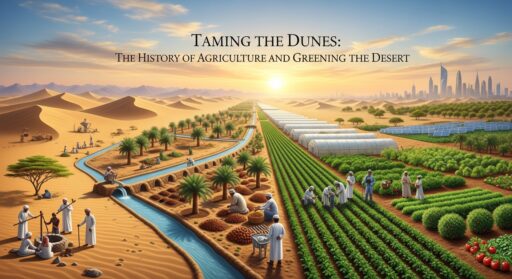
Long before the era of modern technology, the inhabitants of the UAE mastered the harsh desert environment through an ingenious irrigation system known as the falaj. These underground water channels represent one of the oldest and most sophisticated engineering achievements in the region, demonstrating remarkable understanding of hydrology and topography that enabled civilization to flourish in an arid landscape.
History
The falaj system dates back over 3,000 years to the Iron Age, with evidence suggesting the technology was introduced from Persia where it was known as qanat. The earliest aflaj in the UAE have been discovered at Al Ain, with carbon dating confirming their use as early as 1000 BCE. This ancient technology sustained settlements through successive civilizations, including the Umm an-Nar and Wadi Suq periods, and remained the primary water management system until the modern era of desalination.
Key Features
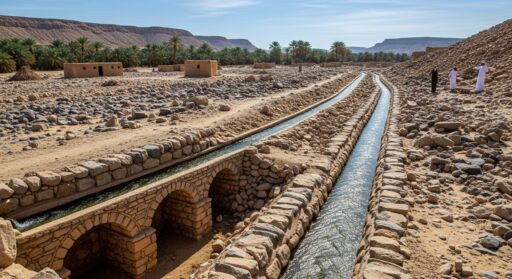
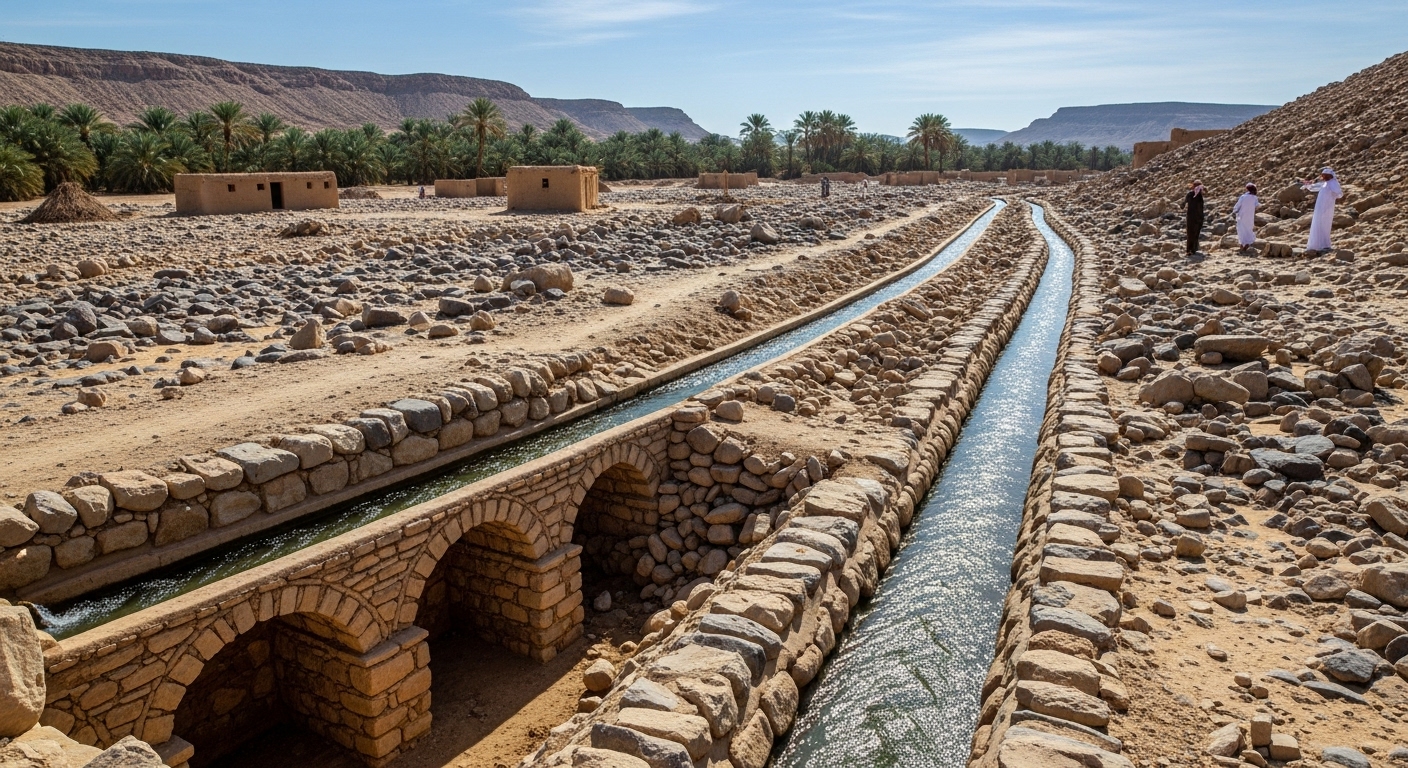
A falaj is a gravity-fed irrigation system consisting of three main components:
- Mother Well: Dug into the water table at the foot of mountains, often reaching depths of 10-20 meters
- Underground Channel: Gently sloped tunnel extending kilometers to agricultural areas, preventing water evaporation
- Surface Canals: Distribution network directing water to farms and settlements in precise rotations
The system required precise engineering – a slope of just 1:1000 maintained water flow while preventing erosion. Vertical access shafts along the route provided construction access and maintenance points.
Cultural Significance
The falaj was more than just infrastructure; it formed the social and economic backbone of desert communities. Water distribution followed strict time-sharing systems that reinforced community cooperation and governance. The fair allocation of water rights (athar) became embedded in local jurisprudence, with disputes settled by specialized judges. These systems created oases that supported date palm cultivation, which in turn provided food, building materials, and shade – enabling permanent settlement in previously uninhabitable areas.
Modern Relevance
While modern desalination has replaced the falaj as the primary water source, the ancient system remains culturally significant. Five falaj systems in Al Ain received UNESCO World Heritage status in 2011, recognizing their outstanding universal value. Traditional water distribution principles have influenced modern water management policies, and restoration projects continue to maintain functional aflaj as living museums. The technology inspires contemporary engineers exploring sustainable water solutions in arid environments.
Conclusion
The falaj system stands as a testament to human ingenuity in overcoming environmental challenges. This ancient technology not only enabled survival in the desert but facilitated the development of complex societies with sophisticated governance systems. As the UAE continues to innovate in water sustainability, the principles embodied in the falaj – efficient resource use, community management, and respect for natural systems – remain profoundly relevant today.