

Introduction
The UAE’s agricultural history represents an epic struggle against arid conditions, evolving from subsistence oasis farming to sophisticated desert agriculture that has literally transformed the landscape. This journey from survival to sustainability demonstrates human determination and technological innovation in making the desert bloom.
History
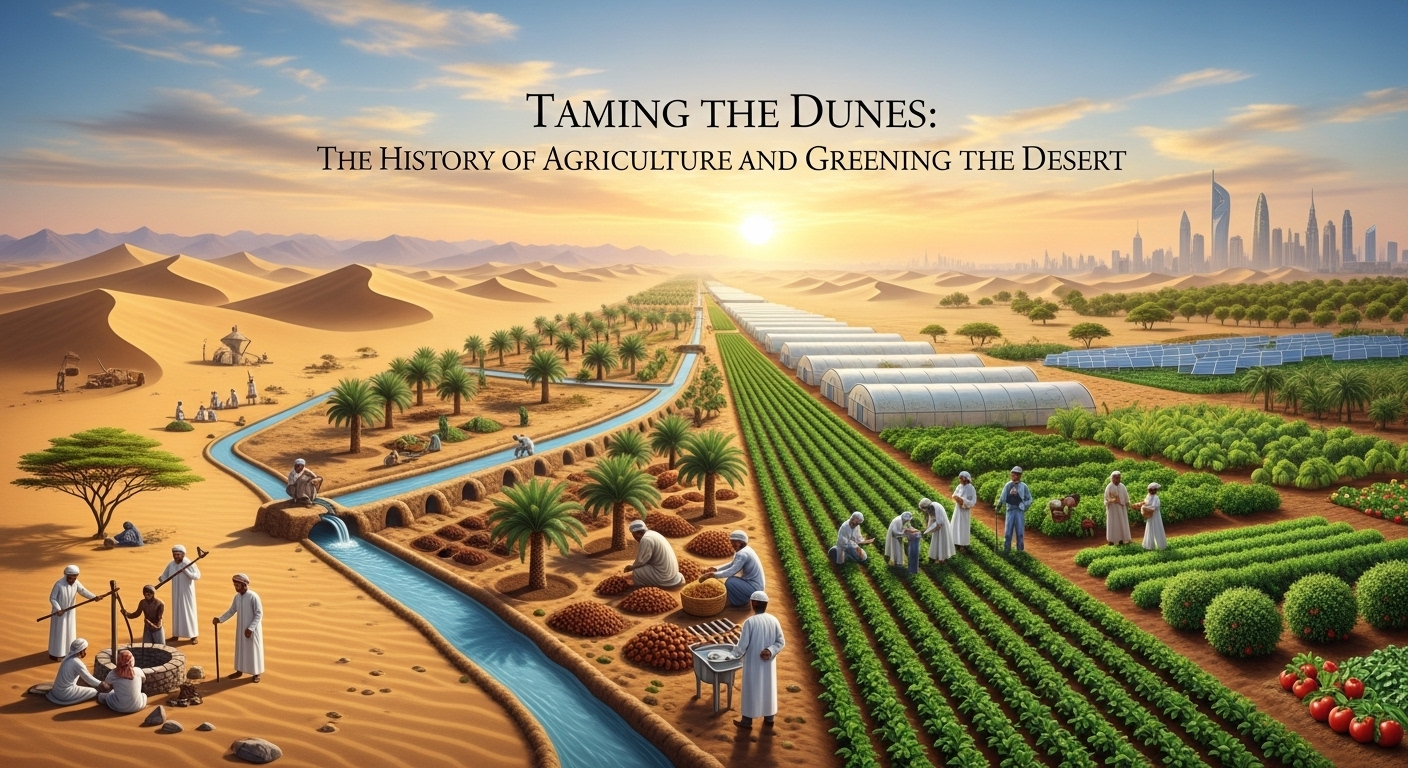
Agricultural development progressed through distinct phases:
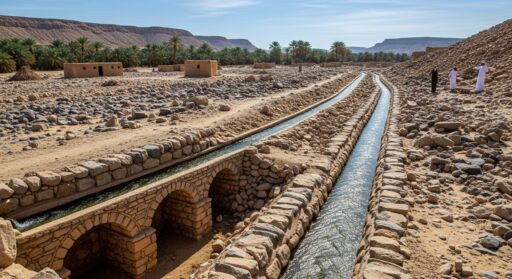
- Traditional Era (Pre-1960s): Limited to oases using falaj irrigation for date palms and limited crops
- Experimental Phase (1960s-1980s): Government-subsciedized farms using deep wells and chemical fertilizers
- Sustainable Era (1990s-Present): Focus on water conservation, protected agriculture, and alternative methods like hydroponics
Key Features
Key innovations include:
- Water Management: Transition from falaj to well irrigation to modern drip systems reducing water usage by 60-70%
- Soil Improvement: Large-scale soil conditioning using organic matter and advanced fertilizers
- Protected Agriculture: Greenhouse technologies with climate control systems
- Alternative Methods: Hydroponics, aeroponics, and vertical farming in urban areas
Cultural Significance
The greening of the desert holds deep cultural meaning beyond food production. It represents the triumph of vision over environment and has become a point of national pride. Agricultural development was personally championed by Sheikh Zayed, who saw it as essential for food security and environmental improvement. The transformation of deserts into productive land symbolizes the broader national transformation from scarcity to abundance.
Modern Relevance
Today, the UAE is pioneering next-generation agricultural technologies suited for extreme environments. The Food Security Strategy 2051 aims to make the nation a world leader in innovative food production. Research centers are developing salt-tolerant crops, closed-loop water systems, and desert-adapted farming techniques that have global applications in climate change adaptation. These innovations continue the historical mission of making arid lands productive while addressing contemporary challenges of water scarcity and food security.
Conclusion
The history of agriculture in the UAE is a story of continuous innovation and adaptation. From ancient falaj systems to modern vertical farms, each technological advance has built upon previous knowledge while addressing new challenges. This legacy of making the desert productive now positions the UAE as a global contributor to solving one of humanity’s most pressing problems: how to feed growing populations in water-scarce environments.