


Introduction
The UAE’s journey into the digital age is marked by strategic adoptions of communication technologies that transformed society. The introduction of the telephone, television, and internet at key moments in the nation’s development accelerated its connectivity with the world and reshaped daily life, business, and governance in profound ways.
History
Telecommunications development followed the nation’s oil-fueled growth:
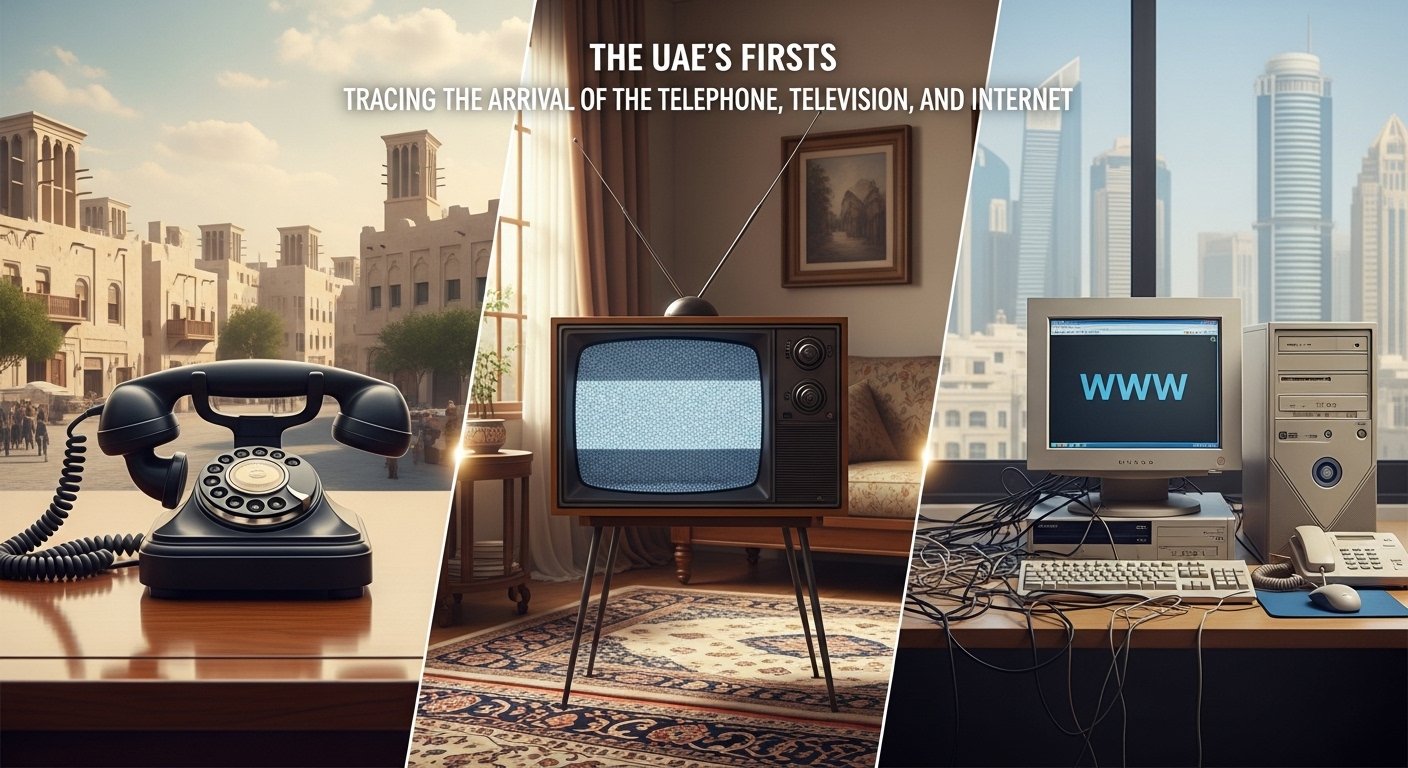
- Telephone (1950s-1960s): The first manual telephone exchange opened in Dubai in 1955 with 100 lines, expanding to other emirates through the 1960s
- Television (1960s): Dubai Television launched in 1968, followed by Abu Dhabi Television in 1969, bringing broadcast media to the region
- Internet (1990s): The UAE became the first Arab Gulf state to offer public internet access in 1995 through Etisalat’s “E-Vision” service
Key Features
Each technological introduction represented a milestone:
- Early Telephone Systems: Manual switchboards operated by bilingual operators; limited to major population centers initially
- Television Broadcasting: Black-and-white programming mixing local news with imported content; satellite connectivity expanding reach
- Internet Rollout: Dial-up services with content filtering; rapid transition to broadband in early 2000s; early e-government initiatives
Cultural Significance
These technologies dramatically altered social dynamics and information access. Television created shared national experiences and cultural reference points, while telephones transformed business communications and family connections. The internet’s arrival began redefining education, commerce, and social interaction. Each innovation required balancing modern connectivity with cultural preservation, leading to the UAE’s distinctive approach to managing digital transformation.
Modern Relevance
The foundation laid by these early adoptions positioned the UAE as a regional digital leader. The nation now boasts among the highest internet penetration rates globally and has launched ambitious digital government initiatives. The same strategic vision that guided early telecommunications development now drives investments in artificial intelligence, smart cities, and space technology. Understanding this history of technological adoption helps explain the UAE’s current leadership in the digital economy.
Conclusion
The sequential introduction of telephone, television, and internet technologies created a cascade of social transformation that propelled the UAE into the modern era. Each technology was adopted at precisely the right moment to maximize its developmental impact while maintaining cultural continuity. This history of strategic technological embrace continues to inform the nation’s approach to innovation, positioning it at the forefront of the Fourth Industrial Revolution.