

Introduction
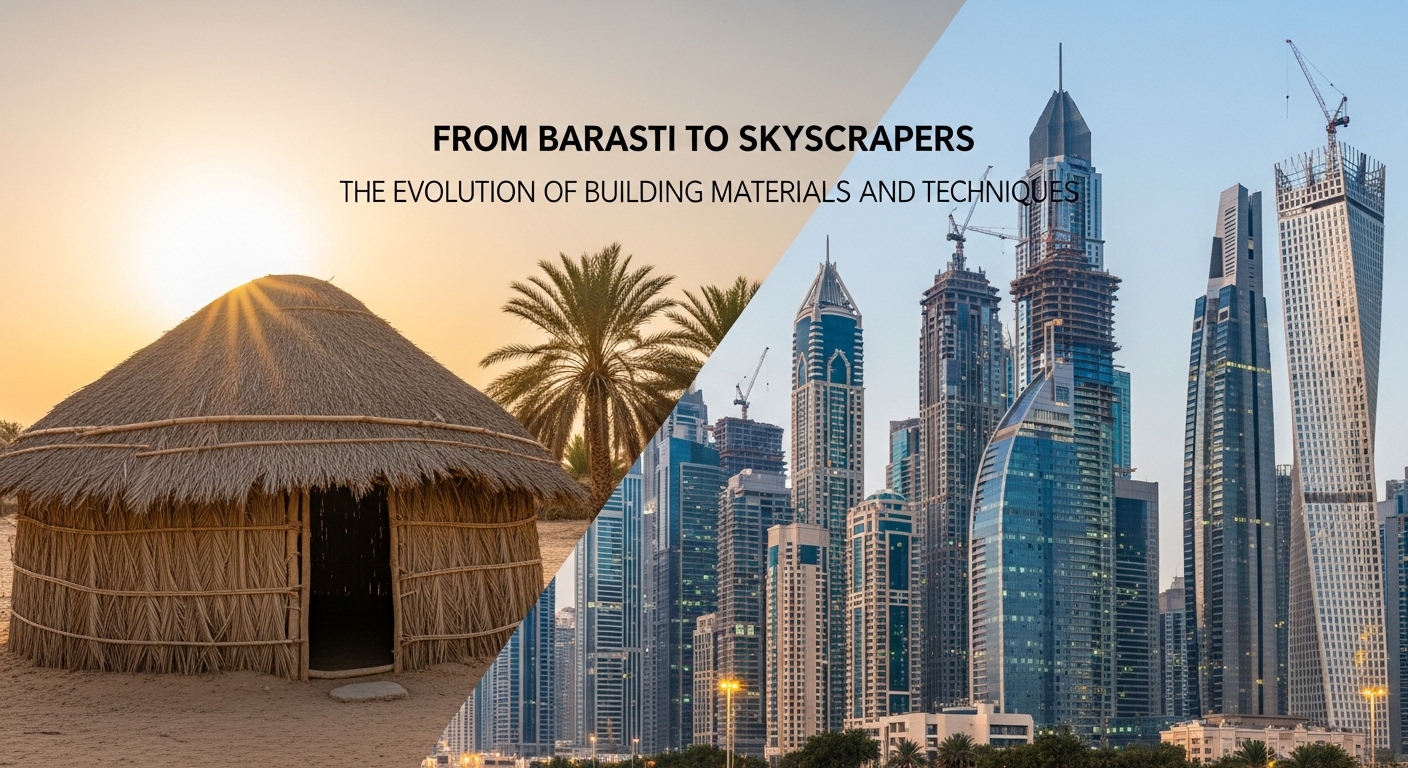
The architectural landscape of the UAE tells a dramatic story of technological evolution, from the organic barasti dwellings of the pre-oil era to the engineering marvels of contemporary skyscrapers. This journey through building materials and methods reflects the nation’s rapid transformation while maintaining connections to its environmental heritage and cultural identity.
History
Traditional construction utilized locally available materials perfectly adapted to the climate. Coastal communities built barasti (areesh) houses from palm fronds, while inland settlements used mudbrick and coral stone. The 1960s oil discoveries initiated a construction revolution, beginning with concrete block manufacturing in the 1970s, steel frame construction in the 1980s, and culminating in the supertall towers of the 21st century that incorporate cutting-edge materials and digital fabrication technologies.
Key Features
The evolution encompasses several distinct phases:
- Traditional (Pre-1960s): Palm frond structures with woven walls and layered roofs; coral stone blocks bonded with sarooj (traditional waterproof mortar); wind towers for natural cooling
- Transitional (1960s-1980s): Concrete block construction; early reinforced concrete frames; introduction of glass curtain walls and air conditioning
- Modern (1990s-Present): Steel and composite structures; high-performance glass; computerized building management systems; 3D-printed components; adaptive facades
Cultural Significance
This technological progression represents more than just construction advances – it mirrors the UAE’s journey from local subsistence to global leadership. The barasti house embodied environmental wisdom and community values, with its porous structure allowing cooling breezes and its construction involving collective effort. Modern skyscrapers express national ambition and technological confidence while increasingly incorporating sustainable design principles that echo traditional environmental strategies.
Modern Relevance
Contemporary architecture in the UAE skillfully blends heritage with innovation. The Louvre Abu Dhabi’s complex dome creates a “rain of light” reminiscent of palm frond filtering, while the Burj Khalifa’s cladding system responds to desert sun angles much like traditional mashrabiya screens. The nation is now pioneering 3D-printed buildings and smart cities, establishing new global standards for construction technology while researching how traditional materials like sarooj can enhance modern sustainable design.
Conclusion
The transformation from barasti to skyscrapers encapsulates the UAE’s remarkable development story. Each building material and technique represents a chapter in the nation’s relationship with its environment, resources, and aspirations. As the UAE continues to push architectural boundaries, it maintains a thoughtful dialogue between its construction heritage and its future vision, creating a built environment that is both globally significant and culturally grounded.